Cultural Center and Departmental Institute of Fine Arts
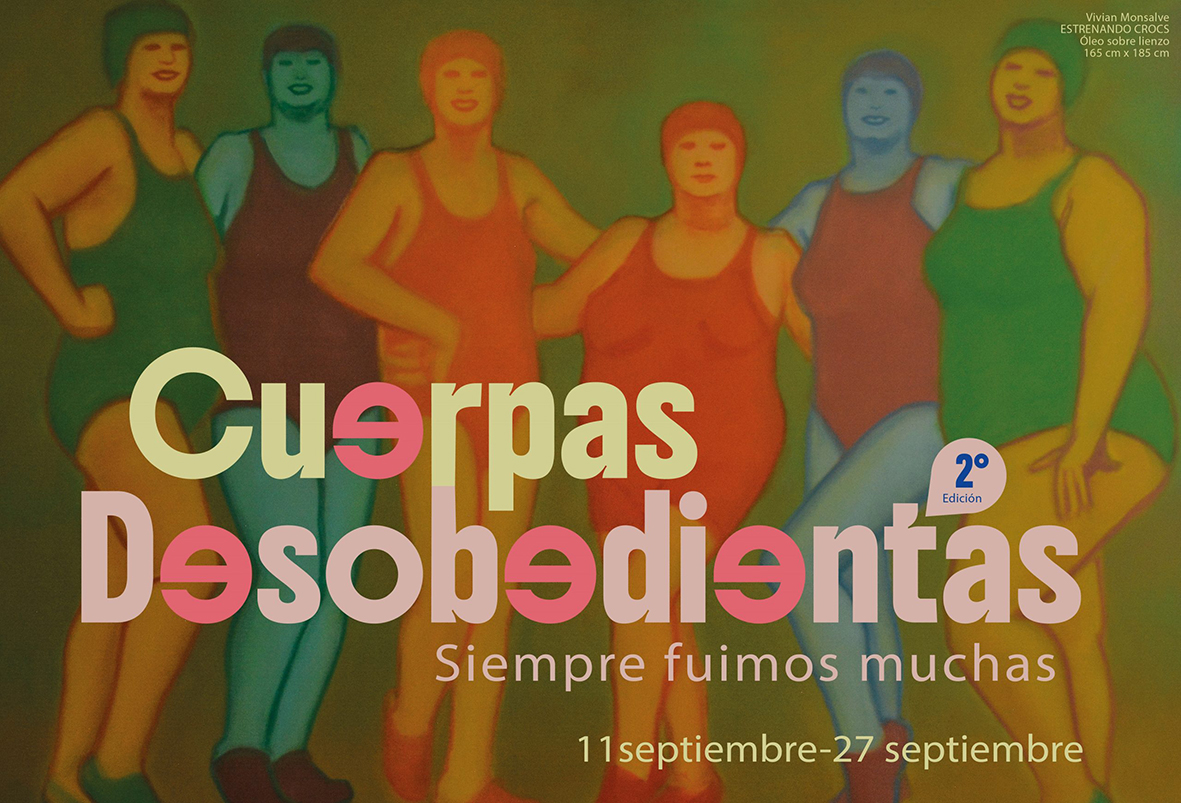
Curated by Yohanna Roa, September – October 2025
This exhibition is part of an ongoing research project emerging from a process of personal re-existence. It aims to open and unsettle the discursive framework through which the artistic production of the city of Cali has been exhibited, historicized, and documented. I have structured it from an intersectional perspective, in which gender is a determining condition for understanding, on the one hand, the kinds of works that have faced the greatest difficulty in being exhibited, and on the other, the structural origins of that difficulty. Such obstacles arise from an entire categorical system of historical organization—of ideas, concepts, and realities—implemented as structures of power that marginalize certain practices when constituting the predominant historical narrative of the city. That narrative has largely centered on a social hyperrealism produced particularly by men or masculinized bodies. Inevitably, this exhibition engages in a dispute with established discourses that have determined representation within the art field, yet have by no means determined the becoming and unfolding of artistic production in the city.
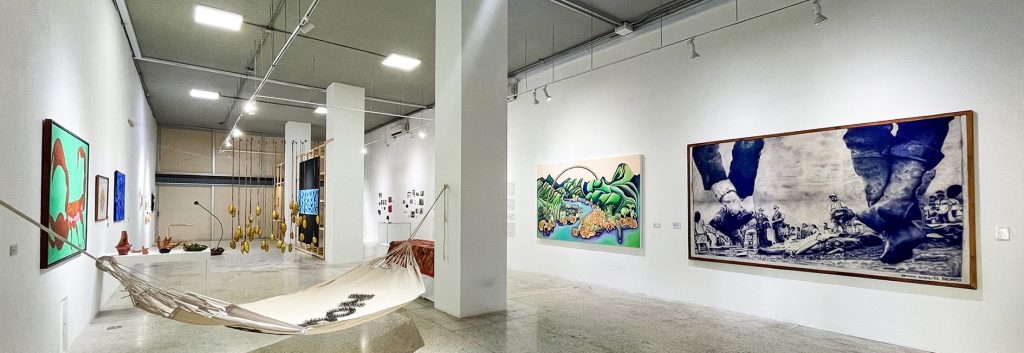
Instituto departamental de Bellas Artes. Exhibition view. Photo INES_Magazina
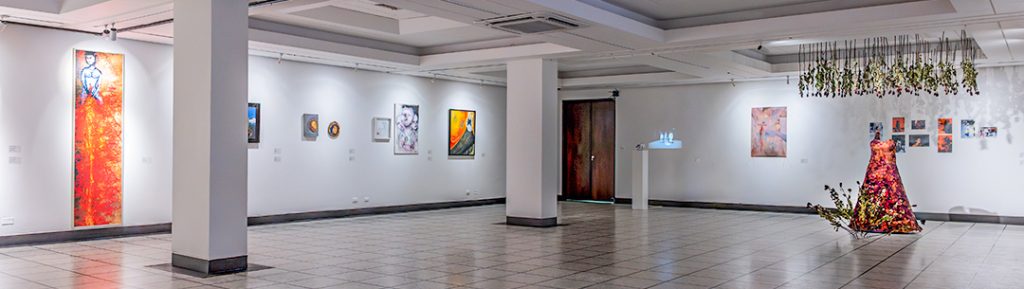
Cali Cultural Center. Exhibition View. Photo Antonio Juarez Caudillo
One important aspect I challenge from the curatorial position is the idea of the hero—that figure who rises vertically, head held high as revolutionary and milestone, defender and founder of the patria; everything may be forgiven except betrayal of the patria. This exhibition, however, situates itself beyond such limits and opens the possibility of recognizing multiple matrias.
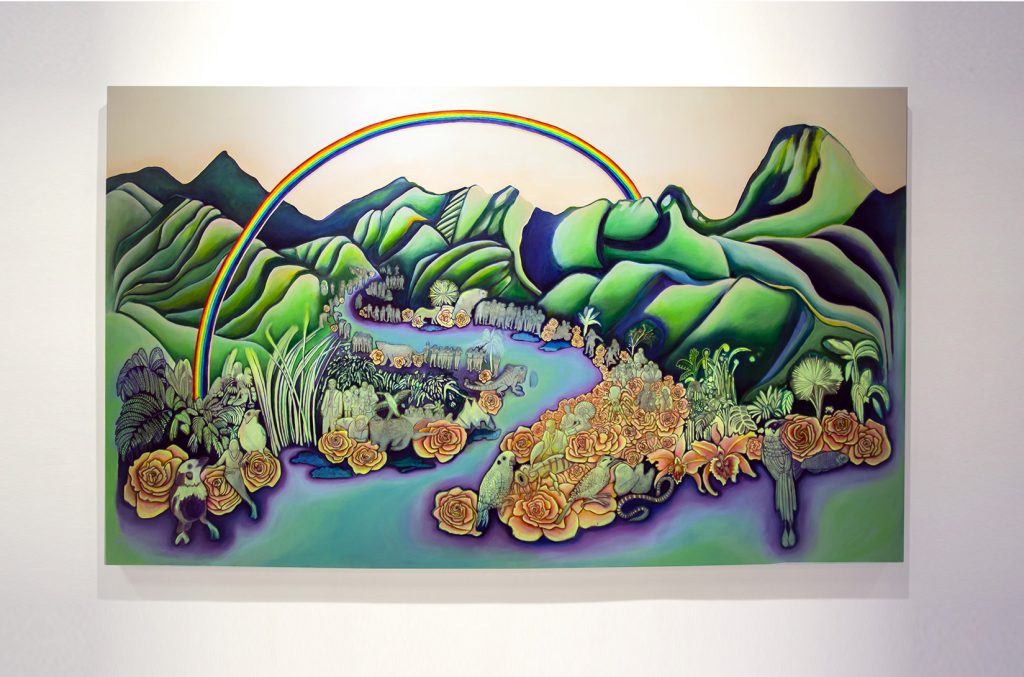
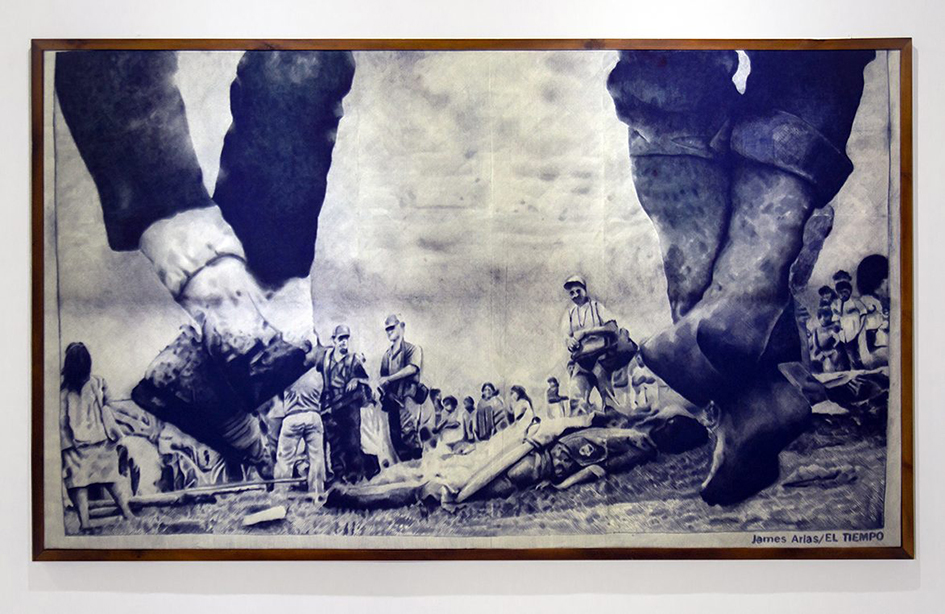
Left: Río Nuevo (New River). Ana María Velasco. 2,50 mts x 1,50 mts. Acrylic on Canvas. 2025 Right: Process for Memory (Blue Drawing), photograph published in El Tiempo newspaper, 1991, Angélica Mercedes Castro, 300 cm x 250 cm, tracing with blue carbon-sensitive sheet on coastal canvas. 2021–2023. Photograph courtesy of Instituto Departamental de Bellas Artes – María del Mar Castro.

Right: Sweet Drops. Janeth Blanco Parra, Variable dimensions, Performance, 2025. Photos by Antonio Juárez Caudillo.
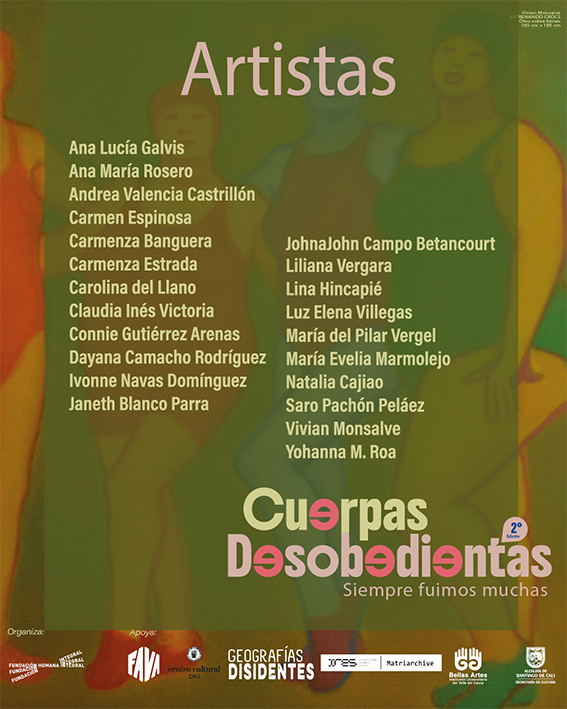
Establishing matriarchal and non-heteronormative lineages requires, first, that we become capable of seeing and knowing one another—among nosotras and nosotres—and of having conversations that did not take place in the past (Lugones). It also requires reconsidering that those conversations were impossible because breathing outside a canon that relegated non-masculinized bodies was denied. We are only now beginning to allow these artistic productions—long positioned outside the narrated artistic margin of the city—to breathe. This exhibition has a congregational character; it is a re-gathering with the purpose of looking into one another’s eyes and affirming that we have always been here, that we have been many—dissident, radical, and transgressive—and of articulating the ways in which we have been so. The 4XX artists who form part of this exhibition produce a polyphony of voices, within which there are both convergences and divergences.

JohnaJohn Campo Betancourt. Art of the Tramoyo 3.0. 2.50 m x 5 m. Installation. 2025.
Within the categorical system I propose, I revalue and reconfigure the concepts of kitsch and cursi—terms traditionally used to evaluate “emotive, apparently superficial” artistic productions, those laden with personal emotion and perceived conceptual weakness for revealing the intimate and personal. From a Benjaminian perspective, kitsch and cursi refer to experiences that provide aesthetic enjoyment without generating knowledge. In this sense, displaying one’s own wounded physical-social body, pointing to the intimate, the ridiculous, or the ordinary, is deemed personal and therefore non-neutral and apolitical. Thus, revolution and resistance continue to be conceived as social acts—neither daily nor personal nor collective—but as vertical gestures directed toward the masses. I do not defend literalism; rather, I contest the exclusion of the personal as merely decorative, as something that does not produce knowledge. Much of the artistic production of women and bodies in transit has been excluded because it has failed to be recognized that the personal is political, and therefore the political is also personal. It is worth noting that nearly all traditional revolutions have failed in practical terms of lived reality; the day after celebration, their verticality and power of exclusion reappear. For this reason, from the curatorial standpoint, this exhibition proposes that revolution must arise in everyday life. Revolution must be daily, because what requires transformation are the relationships among all; this is the only way to reform social structures. There can be no hero, king, sultan, or caudillo; as a community, we must form coalitions across differences.
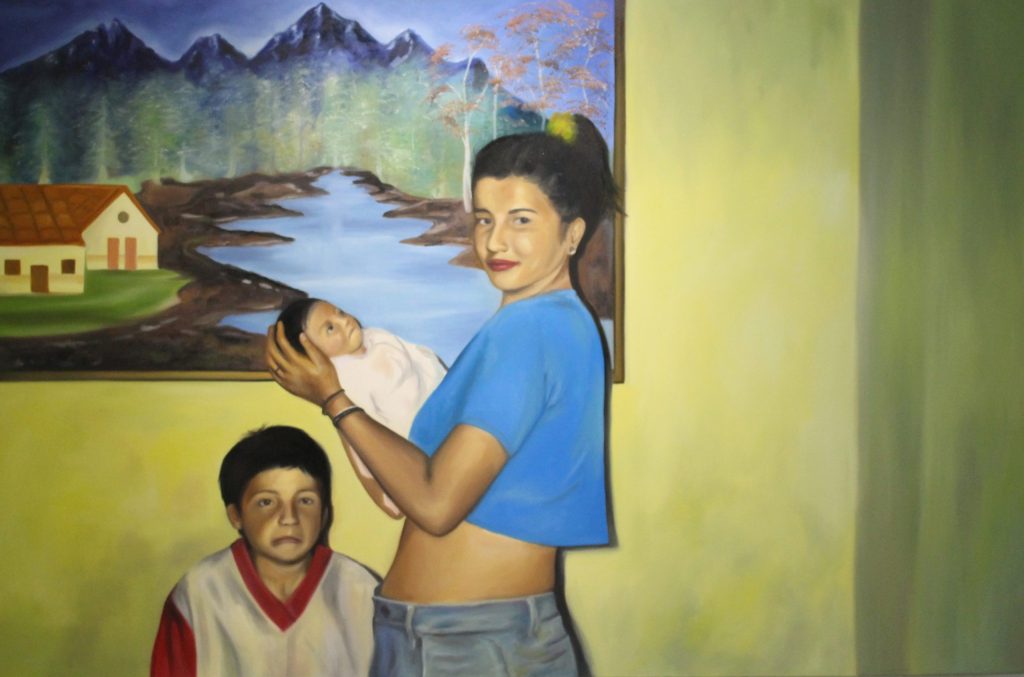
Yumbo. Dayana Camacho Rodríguez, 180 cm x 120 cm, Oil on canvas, 2019.
This exhibition brings into dialogue a polyphony of voices. Although, through a vertical curatorial procedure, I established two criteria—body-territory—to structure the exhibition, the network is so complex that it would be reductive to claim that these artists’ trajectories can be confined to those two analytical categories. I determined the distribution of the galleries by placing at the Secretaría de Cultura the works in which references to the body were most evident, and at Bellas Artes those that foreground references to territory. Yet these dimensions are constantly interwoven. It is also important to note that the works included in this exhibition are presence—body, matter—whose function is to signal that we are here, but they do not determine or define the artists in our complexities. However, the body as territory and territory as body offer a perspective that investigates relationships connecting the personal with the political. Cuerpas with uteruses and breasts, and those other cuerpxs not defined by physiology—often more susceptible to violation or invasion of their sovereignty due to gender condition—are at times nearly forced to be conceived as territories in dispute, especially when gender intersects with race and social class.
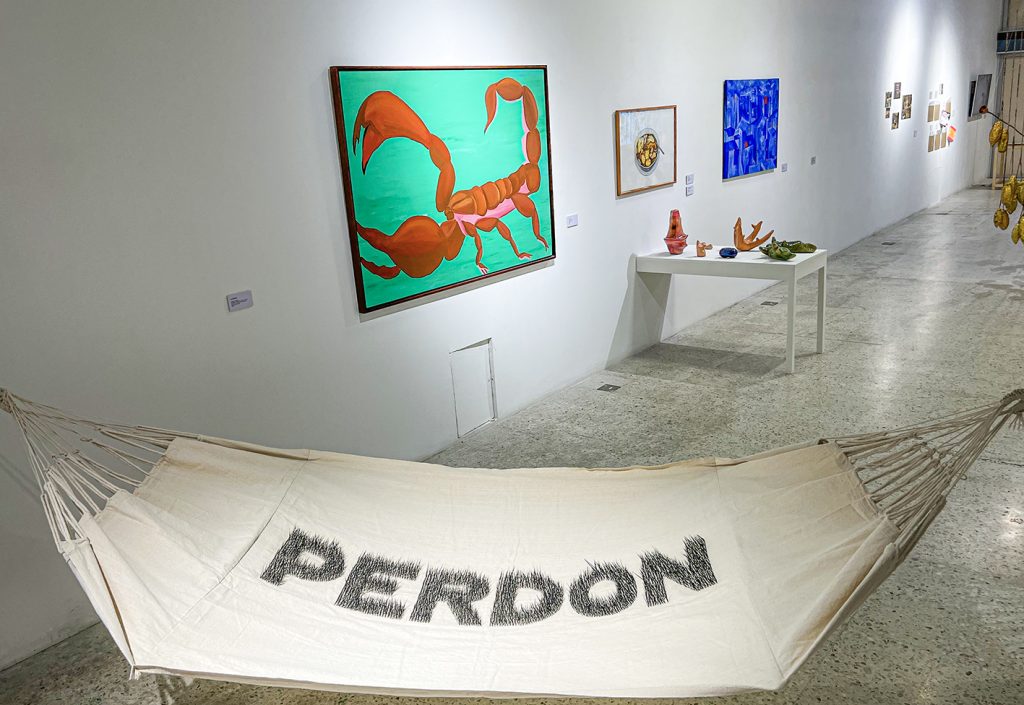
CATENARIES, (Perdon – Forgiveness) Ángela Villegas, installation 377 cm x 132 cm. Chonta thorns inserted into white hammocks, Top Escorpión. Ana María Millán. 1,67 X 1,15 m. Pintura. 2025. Top Right: Mónica Restrepo.Still Life. 100 x 70 cm. The Seeds of Coming. 27 ceramic sculptures. Frit, Terra Sigillata, Burnished. Table. Variable dimensions. 2020 – 2024. Instituto Departamental de Bellas Artes courtesy – María del Mar Castro.
This exhibition incorporates three research projects into its curatorial discourse, and I thank lxs autorxs for allowing me to weave their processes into this framework: Colectivo La Plaza, María del Pilar Vergel, and Leandra Plaza. Their investigations articulate with my own and expand the narratives. I must note that one of my own works is included in the exhibition as a result of María del Pilar Vergel’s research. It is important to clarify that I have not intended to suggest that this exhibition encompasses 100% of the city’s artists. Many are not present for various life circumstances—personal, political, or simply beyond the reach of my radar. This exhibition visualizes, broadens, and extends, but it is not a totality. As curator, I am opening a path—a senda—that I hope others will have the resolve to continue.
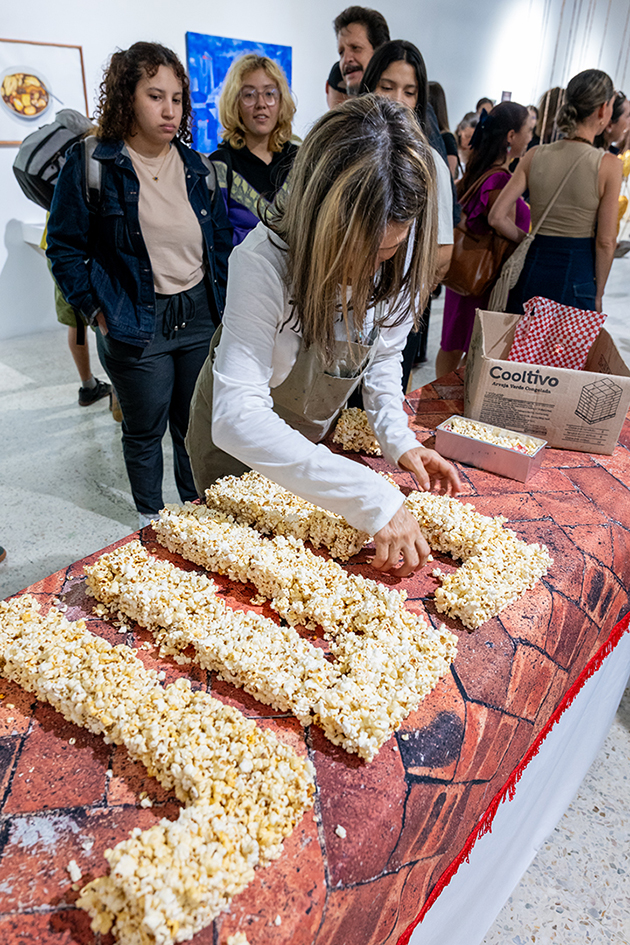
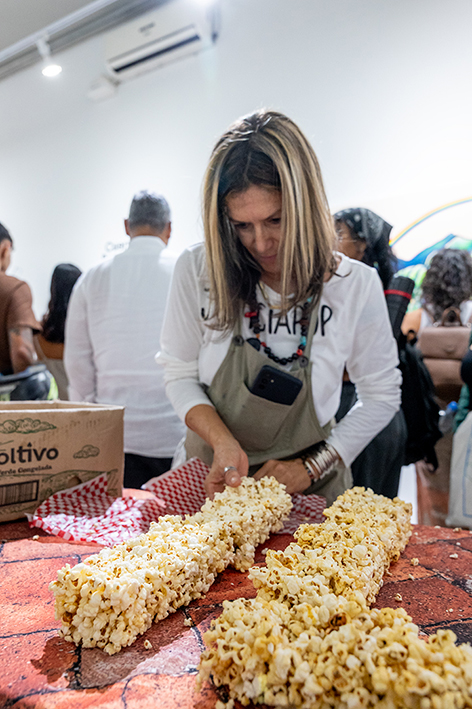
POP Justice. Alejandra Gutiérrez. Variable dimensions. Performance. 2025. Photos by Antonio Juárez Caudillo.
From my perspective as curator and artist, my objective has been to allow this exhibition to be dirty, anti-patriot, clean, matriot; to contradict itself and to reveal uncertainties; to admit that history must be like life itself—multiple, hesitant. It is unreal to claim that the scientific method is precise, infallible, neutral; on the contrary, it is an exercise of power, generally masculinized, ostensibly aseptic, and therefore biased. Revolution must be quotidian—emerging in conversations while we cook, in the crochet needle, or as Gloria Anzaldúa suggests, in transit on the bus, on the way to work, in the pause while preparing a meal. This exhibition is a revolution, an exercise of re-existence in which artists re-exist through the everyday, making visible how the politics of the personal—of the quotidian—are directly connected to the macro-structural social order and are therefore feasible revolutionary acts.
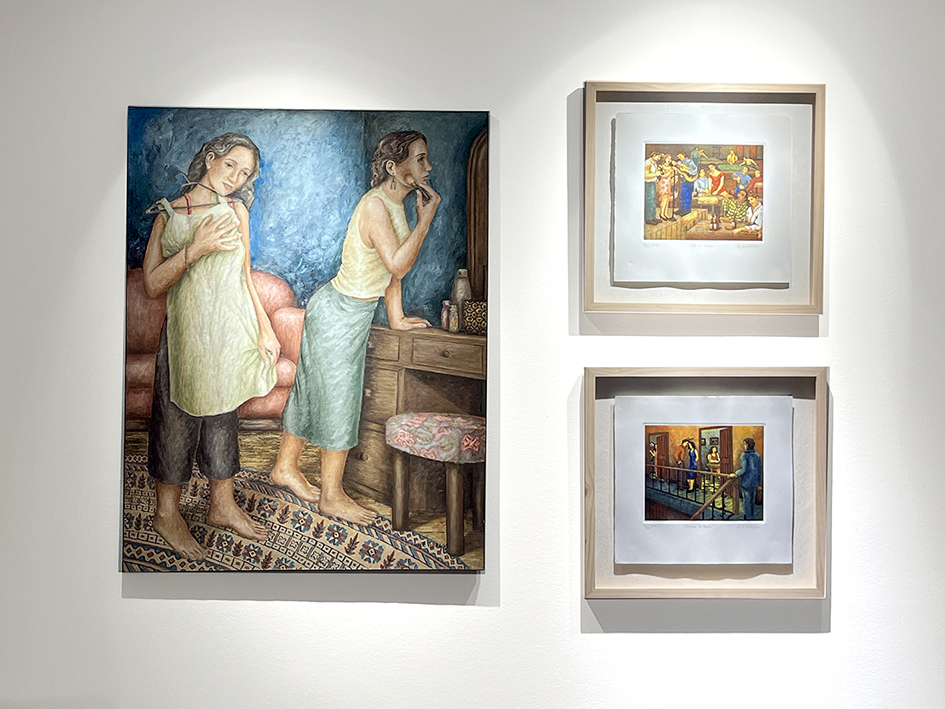
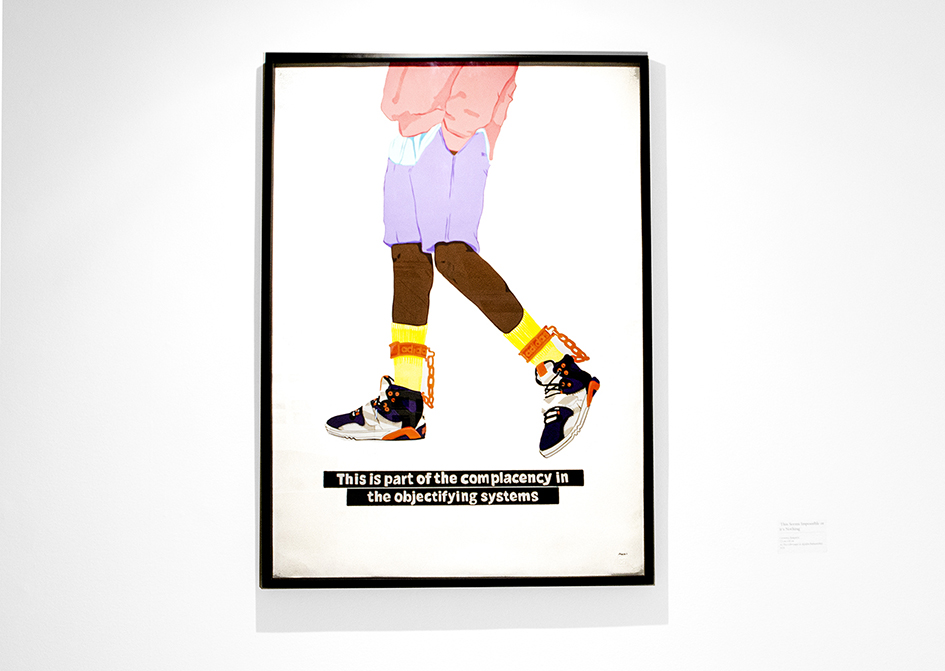
Luz Elena Villegas. Painting and printmaking. Colored metal. 2003. Carmenza Banguera. 125 cm x 90 cm. Acrylic on cotton paper (Hahnemühle). 2024
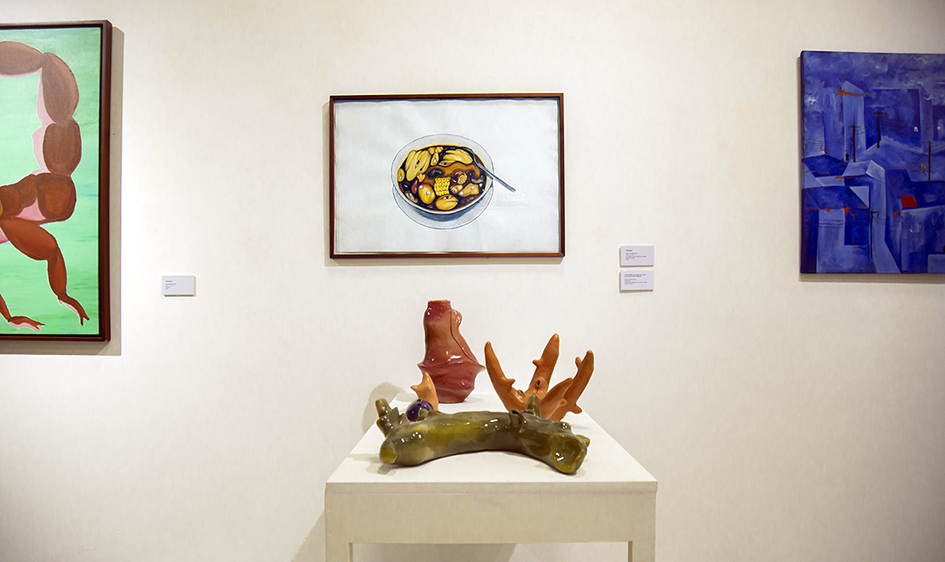
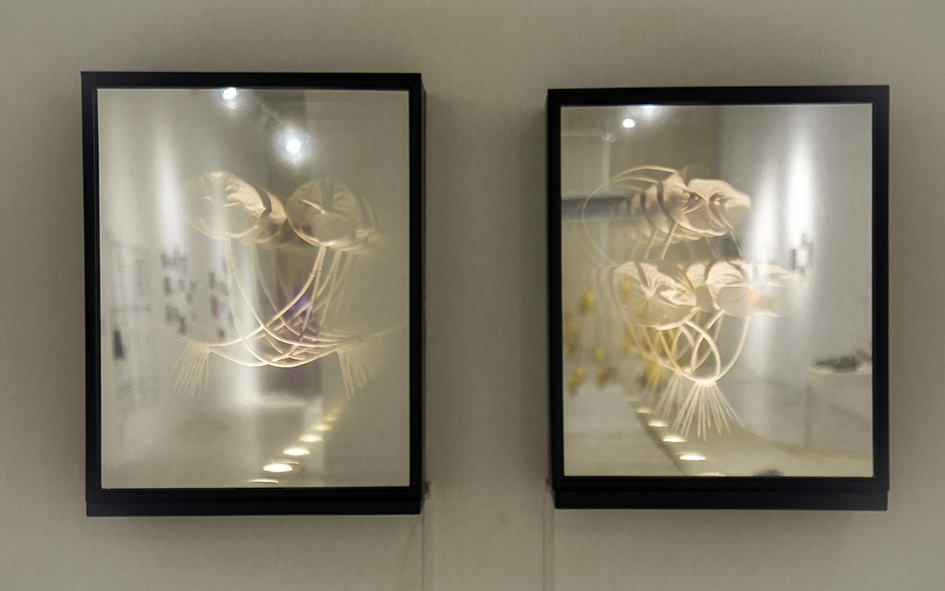
“Still Life” Mónica Restrepo. 100 cm x 70 cm. Watercolor on Hahnemühle watercolor paper. 2024. “The Seeds Yet to Come”, 27 ceramic sculptures, 100 cm x 70 cm. Frit, Terra Sigillata, Burnished. 2020–2024. / “At Dusk”. From the series Inside. – Left: Flora Floats in Desire II” Daniela Vargas. 59 cm x 94 cm x 20 cm each. Sculpture, installation. 2022